Genital Infection by Human Papilloma virus
Posted on October 2, 2013 by john in Health care
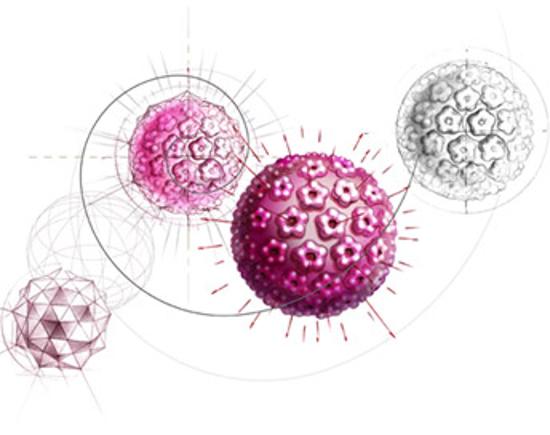 Genital HPV infection is a sexually transmitted disease ( STD) caused by the human papilloma virus (HPV ) . The human papillomavirus is the name given to a group of viruses that includes more than 100 different strains or types .
More than 30 of these viruses are sexually transmitted and can infect the genital area of men and women including the skin of the penis , vulva (area outside the vagina ) , or anus , and the linings of the vagina , cervix or rectum.
Most people who become infected with HPV have no symptoms and the infection go away by itself .
Some types of these viruses are called ” high-risk virus ” and can reveal abnormal Pap tests . These viruses can also cause cancer of the cervix, vulva , vagina , anus or penis.
Other viruses are called ” low-risk virus ” and can produce results with minor abnormalities in Pap smears or cause genital warts. Genital warts or condyloma acuminata are bumps or single or multiple growths that appear in the genital area and on occasion have a cauliflower .
Frequency of infection by papilloma virus
At least 50 percent of sexually active men and women will contract genital HPV infection at some point in their lives . At least 80 percent of women will have contracted genital HPV infection to reach 50 years of age.
How is transmitted infection human papillomavirus ?
The types of HPV that infect the genital area are spread primarily through genital contact. Most HPV infections have no signs or symptoms , for this reason , most people who are infected do not realize they are infected , yet they can transmit the virus to a sexual partner . In very rare cases , a pregnant woman can pass HPV to her baby during vaginal childbirth . A baby that is in contact with HPV rarely develops warts in the throat or larynx.
Signs and symptoms of genital human papillomavirus
Most people who have genital HPV infection do not know they are infected. The virus lives in the skin or mucous membranes and usually causes no symptoms . To some people will present visible genital warts or precancerous changes in the cervix , vulva , anus, or penis. Very rarely , HPV infection can cause genital or anal cancer .
Genital warts are generally as elevations or soft, moist , pink or skin color , usually in the genital area. Warts can be flat or raised , single or multiple , small or large and , in some cases, cauliflower shaped . They can appear on the vulva , vagina or anus or thereabout , in the cervix and on the penis , scrotum , groin or thighs. Warts can appear within weeks or months after sexual contact with an infected person or may not appear .
Genital warts are diagnosed by visual examination. Visible genital warts can be removed by medications which the patient applies , or by treatments performed by a health care provider . Some individuals choose to forego treatment to see if the warts disappear on their own . There is no treatment for genital warts is better than the other and there is no ideal treatment for all cases.
Diagnosis of infection with human papillomavirus
A majority of women are diagnosed with HPV on the basis of abnormal Pap tests . The Pap test is the primary screening tool for cervical cancer or precancerous changes in the cervix , many of which are related to HPV . Also, there is a specific test to detect HPV DNA in women ( HPV DNA test ) . The test can be performed in women with mild abnormal Pap tests or women over 30 years of age at the completion of the Pap test . The results of HPV DNA testing can help health care providers decide if further tests or treatments needed . We recommend reading the article : Screening of Cervical Cancer
There are no tests to detect papillomavirus in men.
Treating injuries human papillomavirus
There is no ” cure” for HPV infection , although in most women the infection goes away on its own. Administered treatments seek to address changes in the skin or mucous membrane caused by HPV infection , such as warts and precancerous changes in the cervix . Read Treatment of Genital Warts and Cervical Dysplasia Treatment
Papillomavirus infection and cervical cancer
All types of HPV can produce results with minor abnormalities in Pap smears with no serious consequences . Approximately 10 of the 30 types identified genital HPV infection can lead , in rare cases, also called cervical cancer cervical cancer. Research has shown that in the majority of women (90 percent ) cervical HPV infection becomes undetectable over a period of two years. Although only a small proportion of women have persistent infection , persistent infection with HPV types “high risk ” is the risk of cervical cancer more important.
The Pap test can detect pre-cancerous and cancerous cells on the cervix . Conducting regular Pap smears and careful medical follow-up , with treatment if necessary , can help ensure that pre-cancerous changes in the cervix caused by HPV infection do not become cervical cancer that can be fatal . The performance of the Pap test used in screening programs for cervical cancer in the United States, has greatly reduced cervical cancer deaths . The American Cancer Society estimates that in 2004 , about 10,520 women will develop invasive cervical cancer and about 3,900 women will die from the disease. Most women who develop invasive cervical cancer have not been made periodic cervical cancer screening .
Prevention of infection by human papilloma virus
If people choose to be sexually active , the best way to prevent genital HPV infections in the future, is to have a long-term mutually monogamous relationship with a partner who have been tested and are known to be uninfected. However, it is difficult to determine whether a partner who has been sexually active in the past is currently infected .
Those who choose to be sexually active and are not in a mutually monogamous relationship lasting and can reduce the risk of genital HPV infection by reducing the number of sexual partners and select a partner who is less likely to be infected. Couples who are less likely to be infected are those who have not had a sexual partner or who have had few sexual partners in the past.
Vaccination is an important factor in the prevention of HPV infection . There are two types of vaccines with human papilloma virus (HPV ) vaccine VPH4 , also called quadrivalent , protecting against HPV types 6, 11 16 and 18 and VPH2 vaccine , also called bivalent , protecting against serotypes of HPV 16 and 18, each of which are produced by different laboratories. The first is marketed as Gardasil and Cervarix second like . For details on vaccination against this virus read the article: Vaccines against human papillomavirus
HPV infection can occur in both male genital areas as the female , whether or not covered or protected by a latex condom . Although it is unknown the effect of condoms in preventing HPV infection has been associated condom use to a lower rate of cervical cancer, which is a disease related to HPV.
Posts related to Genital Infection by Human Papilloma virus





Secure with early repayment of hospital charges

Subscriptions article